THE “PNEUMATIC” AUTOMATA OF THE ANCIENT GREEKS
- KEY HIGHLIGHTS
- Robotics
- computing mechanisms
- Automation & Programming
- Telecommunication
- CRYPTOGRAPHY
- astronomy
- AUTOMOTION & AUTOMATIC NAVIGATION
- Steam mobility
- Jet Propulsion
- RELIGIOUS TECHNOLOGY
- “PNEUMATIC” AUTOMATA
- MEASURING INSTRUMENTS
- TOOLS & MACHINES
- GEODESY & CARTOGRAPHY
- timekeeping
- Gadgets
- HOISTING MACHINES
- MILITARY TECHNOLOGY
- ATHLETIC TECHNOLOGY
- Strategy & showing games
- MEDICAL TECHNOLOGY
- HYDRAULIC TECHNOLOGY
- NAVAL TECHNOLOGY
- TEXTILE TECHNOLOGY
- ancient theatre technology
- AGRICULTURAL TECHNOLOGY
- The Measurements of Man
- PULLING MACHINES
- KINEMATIC MECHANISMS
- WIND & HYDRAULIC ENERGY
- MATERIAL TECHNOLOGY
- MUSICAL INSTRUMENTS
In the Hellenistic Alexandria of the Ptolemy kings, all prior Hellenic thought was carried over, developed, advanced and grown to gigantic proportions while finding its ultimate and practical application. Men of letters and the arts from around the Greek world arrived and staffed its wondrous “Museum” with its great “Library”, which was situated within the royal complex. There lived and acted great scientists such as, Apollonius, Eratosthenes, Aristarchus, Conon, Hipparchus, etc. and three significant engineers, Κtesibios (3rd cent. B.C.), Philon of Byzantium (3rd cent. B.C.) and Heron of Alexandria (1st cent. A.D.) who were the initiators of the famous automata (automatic machines). After the end of the Hellenic-Roman world, their outstanding work spread influencing the Arabian civilisation and in turn spread throughout Europe preparing Renaissance.
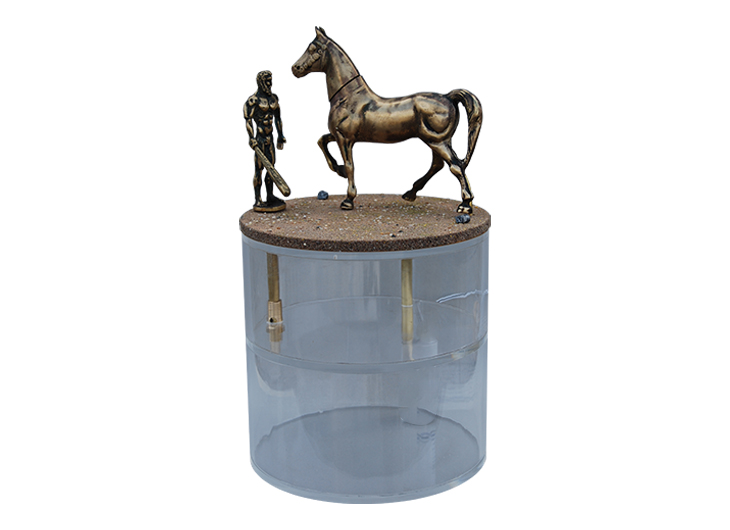
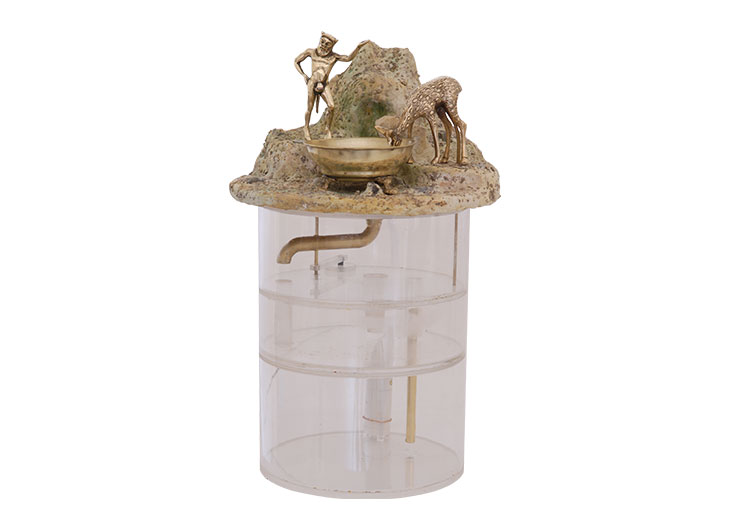
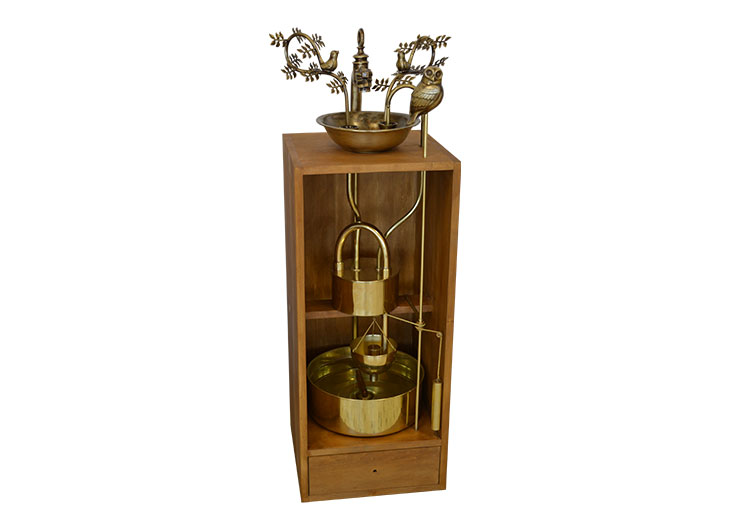
About eighty automata, which constitute an excellent practical application of all the scientific principles known at that time, survived in the books of Heron and Philon in Arabic translation.