
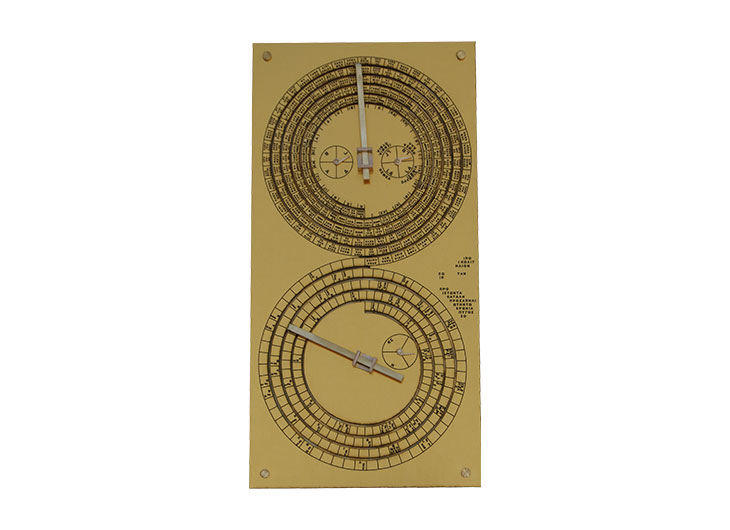
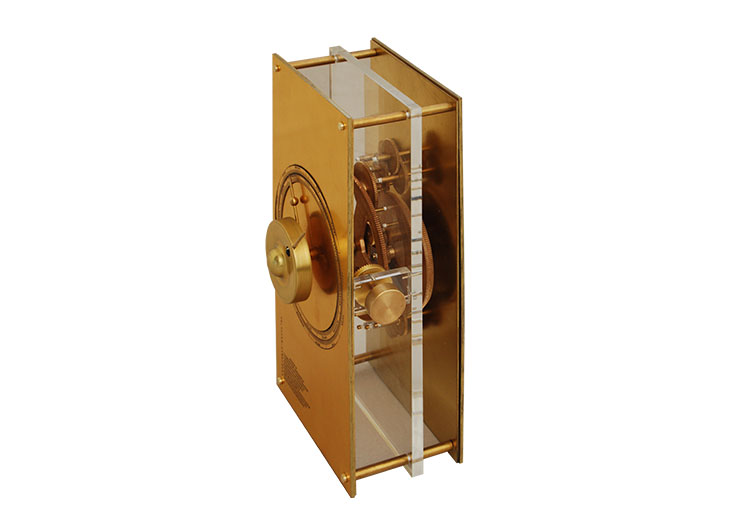
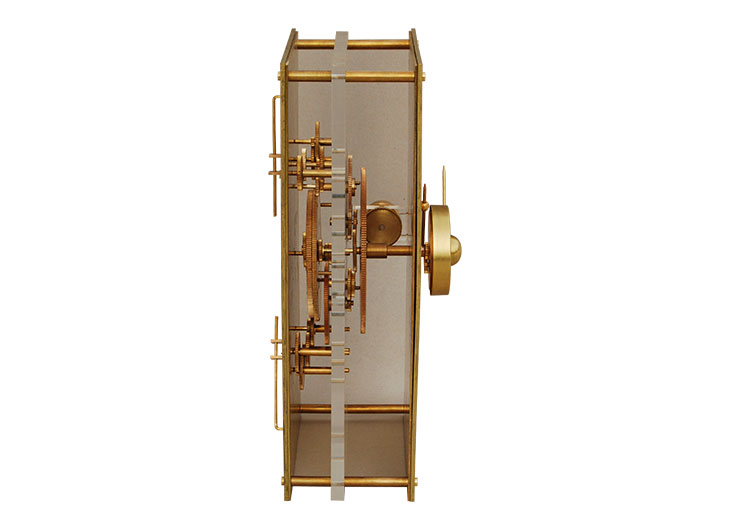
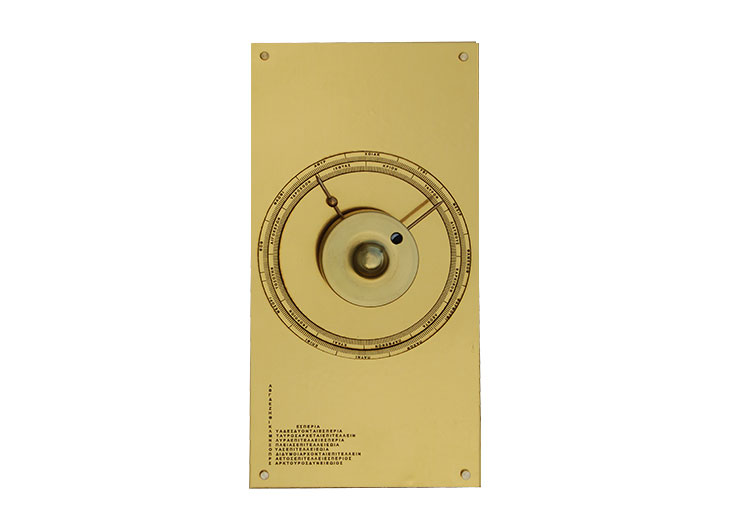
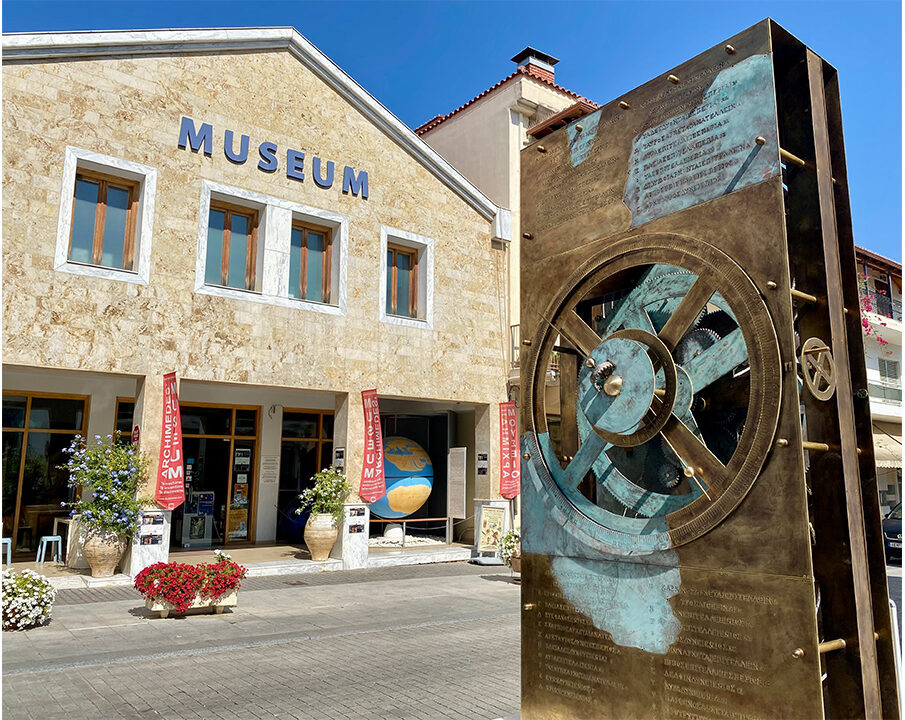
The Antikythera Mechanism is one of the most remarkable technological achievements of antiquity and a striking example of the sophistication of ancient Greek technology. Constructed around 120 BC, it is widely considered the world’s first analog computer.
Through a complex system of interlocking gears, the mechanism was capable of calculating the movements of the Sun and the Moon, predicting eclipses, and representing astronomical and calendrical cycles with impressive accuracy. Its design reflects advanced mathematical and astronomical knowledge, demonstrating a level of engineering far ahead of its time.
At the Museum of Ancient Greek Technology, fully functional handcrafted reconstructions of the Antikythera Mechanism are presented, based on historical sources and modern scientific research. Visitors are able to observe its operation and understand its mechanical logic through direct demonstration.
These reconstructions exist in multiple scales, from smaller models to large-scale constructions, revealing in detail the structure and function of the original device.
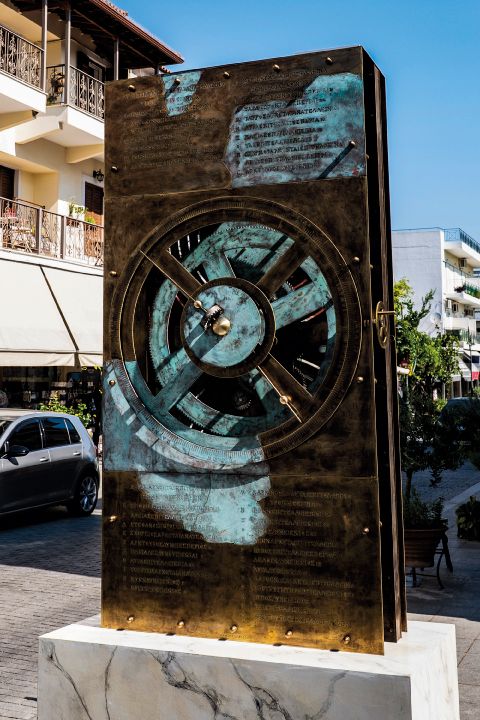
The study and reconstruction of the mechanism continue today, contributing significantly to the modern understanding of ancient Greek science and engineering.
The museum’s founder, Kostas Kotsanas, has dedicated much of his work to researching and reconstructing such technological achievements. His recent book on the Antikythera Mechanism presents a clear explanation of its principles, mechanical structure, and historical significance. The book is currently available at the museum shop.
For those who wish to explore the mechanism more closely, functional reconstructions are also available through the Kotsanas Museum Shop, allowing a hands-on understanding of this unique invention.
The Antikythera Mechanism is not merely an archaeological artifact, but a living testament to the fact that ancient Greek technology laid the foundations of modern science and engineering.