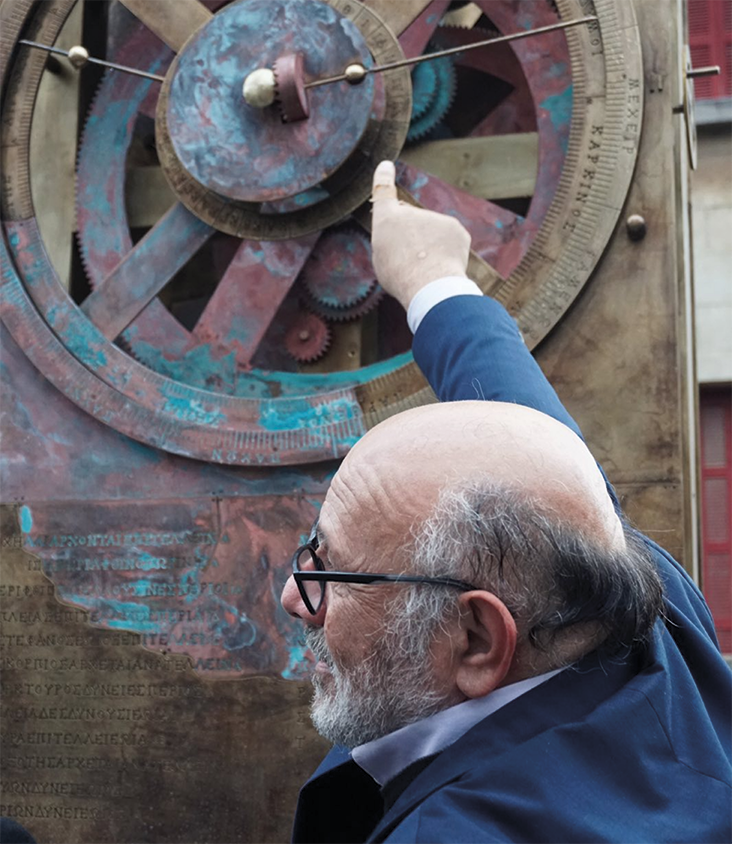
Renowned and without doubt unrivalled to this day, is the contribution of the ancient Greeks to the field of Philosophy and the Fine Arts. Likewise familiar is their contribution to the field of Science. However, the technology of the ancient Greeks is relatively unknown, just as is their incredible performance in this field. The museum’s collection includes more than 500 operating models of ancient Greek inventions. The ancient Greek technological marvel (from the robot – servant of Philon to the cinema of Heron and from the automatic clock of Ktesibios to the analog computer of Antikythera) covers the period from 2000 BC until the end of the ancient Greek world.
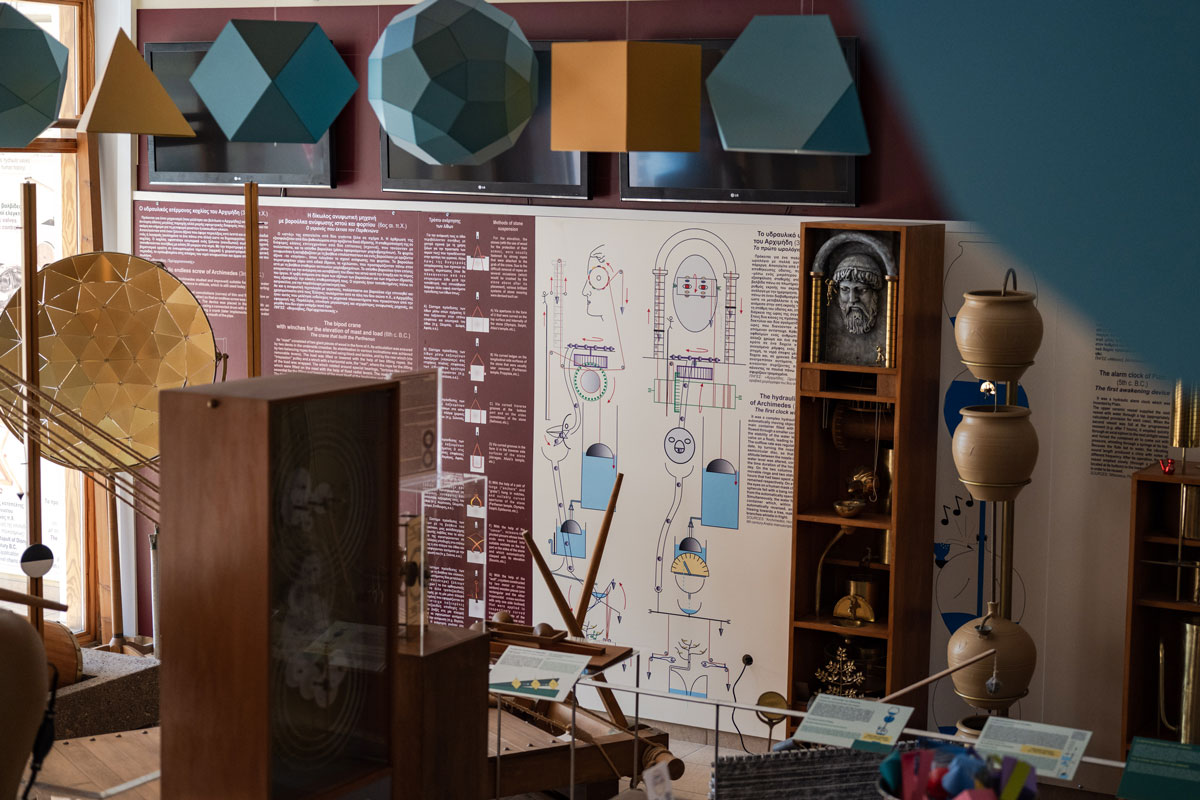
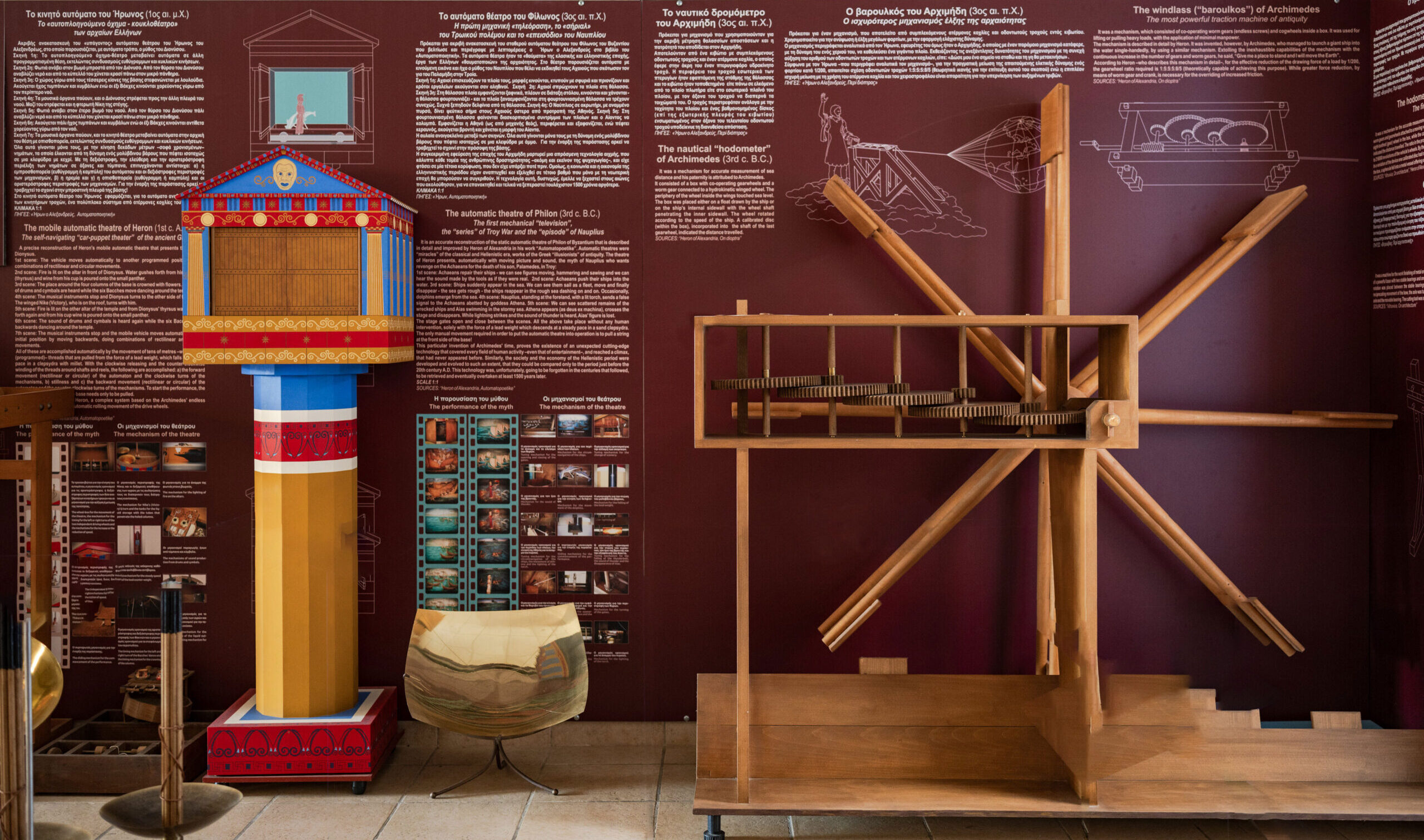
The aim of the museums is to highlight this relatively unknown aspect of ancient Greek civilisation and to prove that the technology of the ancient Greeks, just before the end of the ancient Greek world, was shockingly similar to the beginning of our modern technology. The bolts and nuts, gears and rules, pulleys and belts, sprockets and chains, block and tackles and winches, hydraulic controllers and valves are just some of the inventions of the ancient Greeks which were the foundations of their complex technology. These legacies, identical and irreplaceable, continue today to constitute the building blocks of our modern technology, the development of which would be doubtful without its effortless and undemanding adoption. It simply took over a millennium of maturation for humanity to recover this remarkable forgotten technology. The exploration of this age, when ownership for peak technology was not claimed, demonstrates how much more (than we think) the modern Western Technological Civilisation owes to the Greeks.
Kostas Kotsanas was born in 1963 in Ageira-Seliana, Achaia. He studied in the Department of Mechanical Engineering at the Polytechnic University of Patras (Greece).
He has dedicated his life to the study of ancient Greek culture, particularly in the field of ancient Greek technology. A lot of his research, studies and reconstructions that concern Ancient Greek Technology, have been presented at International Conferences, either as a guest lecturer in Greece and abroad (university of KAN, International Conference “ISSM”, National Library of France, National Museum of Music of Corea) either as a conventioneer (National Conference of Ancient Greek Technology, National Conference: Ancient Greece and the Modern World, University of Patras).
He has created, at his own expenses the 500 that form the exhibition today. Many of the exhibits have been presented in various periodic exhibitions in Greece and abroad (Europe, Asia, USA, and Australia). This effort has not been funded so far by any public or private organization. Kostas Kotsanas has written six books concerning Ancient Greek Technology and he is the inspiratory of all four Museums of Ancient Greek Technology in Athens, Heraklion, Katakolo and Ancient Olympia.